Search SevenCapital


 BACK
West Kensington, With 62 Acres Providing £11.8bn (GDV) of New Development, is London’s Largest Regeneration Hub Says New Survey
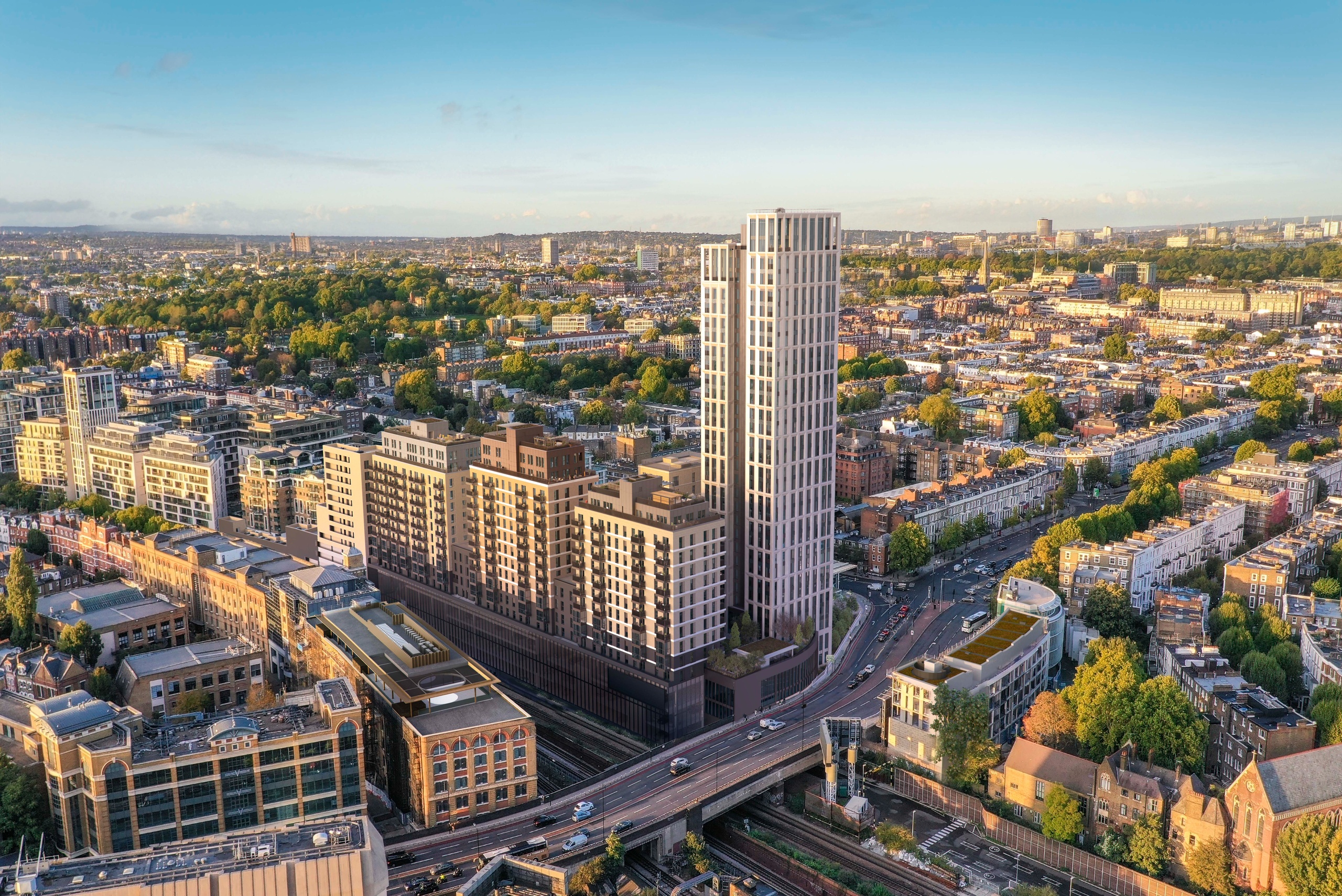
West Kensington, with three key sites providing 62 acres of unused/derelict land being transformed to provide £11.8 billion (GDV) of new development, is London’s largest current regeneration hub, with inward investment creating new homes, offices, retail and leisure amenities. Taking place initially between 2026-2030, the redevelopment ripple is set to generate significant employment, public realm improvements, transport connectivity and a 2.2% to 2.9% additional uplift per annum in West Kensington property values (above the 5.2% pa 10-year Borough average) says a new research report by Pricehubble.
The research, entitled West Kensington: A Leading London Regeneration Destination, provides a detailed analysis of economic data from Lonres, CBRE, the Office for National Statistics, the Royal Borough of Kensington & Chelsea and the Opportunity Kensington High Street Forum. It compares the West Kensington makeover with other London regeneration hubs, including Battersea Power Station and King’s Cross. The independent report is produced by property analytics company Pricehubble, commissioned by SevenCapital, a leading UK investor-developer who is one of several major firms involved in the regeneration of West Kensington.
The report highlights that in a ribbon of West Kensington located between Warwick Road/Redcliffe Gardens to the east and North West Road to the west, there are some 62 acres of derelict/unused brownfield land. This is significantly more derelict land than other London regeneration hubs such as Battersea Power Station (42 acres), core Canary Wharf (57 acres) and Queensway (5 acres) and is equivalent in scale to King’s Cross (67 acres).
The report suggests that because of the scale, the £11.8 billion (GDV) of new development being undertaken makes West Kensington the current largest regeneration investment hub in Inner London, well ahead of Battersea Power Station (£9 billion GDV), Elephant & Castle (£4 billion GDV), Mayfair (£4 billion), King’s Cross (£3 billion) and Queensway (£3 billion).
The 62 acres in West Kensington are located across three sites that are all in relatively proximity – Earls Court (44 acres), Olympia (14 acres) and West Cromwell Road (4 acres). All three sites were originally developed during the Victorian era for exhibition, events and housing, but gradually fell into decline between 1981 to 2008.
Earls Court originally opened in 1887 as the West London Exhibition Centre, expanded in 1935-1937, and then declined from 2008 onwards. Olympia opened in 1886 as one of London’s great Victorian exhibition halls but fell into decline from the 1980s onwards with the closure of the British Rail motorail terminal (1981) and weekly underground services (2011). The site on West Cromwell Road formed part of a suburb of Italianate villas built between 1869-1890 by Victorian builder Thomas Hugget but the housing project stalled, and the land remained vacant, becoming an underused car park and industrial site.
The research highlights that due to its stalled history, average apartment prices in West Kensington are just over £500,000, substantially lower than the average for Kensington (just under £1.25 million) and South Kensington (£1.35 million), the Borough’s higher-priced housing is largely situated to the east of Warwick Road/Redcliffe Gardens. In Kensington (eastern side), South Kensington and Chelsea, over 60% of the homes were built pre-1920, providing Victorian and Edwardian terraces, mansion blocks and villas. The ribbon of derelict land in West Kensington now provides the opportunity for the delivery of contemporary new housing, office, retail and leisure premises, transforming the location into a vibrant new destination for the Borough.
Because of the relative lack of supply in West Kensington of market sale homes, the local market has a sizable rental market, with 40% of the housing being homes rented privately. West Kensington flat prices are also substantially lower than average apartment values in Belgravia (£2.25 million), Knightsbridge (£1.56 million) and Chelsea (£970,000).
Now the three sites in West Kensington are undergoing regeneration. Earls Court is being reborn as a £10 billion (GDV) district set to deliver 4,000 new homes, 2.5 million square feet of workspace, three new cultural venues and 20 acres of parks, squares and public realm. Phase One of the delivery of Earls Court will occur between 2026-2030 (first occupations/completion in 2030), with Phase Two in 2030-2041.
Olympia London is being transformed into a £1.3 billion (GDV) business and cultural destination including 550,000 square feet of offices, a 3,800 capacity music/concerts venue, a 1,575 seat theatre complex and two international hotels. The Olympia project will roll out over 2026 and 2027.
The 100 West Cromwell Road site makeover will create 100 Kensington, a £500 million (GDV) residential-led development providing 462 new homes, including 276 market sale apartments and 186 affordable homes designed around a central podium level linear park. Being delivered during 2026 and 2027, the 100 Kensington project includes a pavilion building for cinema screening and events; a health club with a gym, swimming pool and fitness studio; concierge, retail and office premises.
The three projects will result in an initial five years of significant inward investment and regeneration in West Kensington between 2026-2030. The trio will add £3.8 billion to the economy of the Royal Borough of Kensington & Chelsea, with the redeveloped Earls Court and Olympia creating 32,500 new jobs in the Borough and the trio delivering over 4,400 new homes and over three million square feet of workspace and hospitality, leisure and retail premises. Between January to May 2026 the typical local shopper has spent 13% more per shop on Kensington High Street (475,000 visitors per month) than visitors to the King’s Road in Chelsea.
The research calculates that the regeneration ripple has the potential to generate an additional annual uplift of between 2.2% to 2.9% to sales values in the West Kensington regeneration area compared to the Borough average. Over the last 10 years Kensington and Chelsea house price growth has averaged approximately 5.2% per annum, reflecting both scarcity of supply and sustained demand in the Borough.
The data highlights that as a benchmark, similar properties around King’s Cross reported a 2.1% annual regeneration premium during the main 2008-2015 redevelopment period, and the Battersea Power Station/Nine Elms regeneration zone saw an annual 4.5% premium compared with the Borough average during the later stages of the nine-year redevelopment programme between 2013-2022.
The report says that the workspace, retail and cultural facilities being created in the West Kensington regeneration zone will draw thousands of higher income professionals into the area, many of whom will choose to live and spend their leisure time locally. This will have an impact on the new homes in the West Kensington regeneration zone being purchased both for end use and rental investment.
Potential capital value uplift, competitive pricing, lower service charges (£14.5 per sqft per annum for West Kensington, compared to £18-£22 per sqft for London ultra-prime) and place making will be key drivers for end user buyers in West Kensington, but the strength of the local rental market makes West Kensington appealing for investors.
The rental market is significant since in Kensington and Chelsea over 70% of renters already work within five minutes of their home and they represent a pool of high-earning tenants with average renter incomes close to £80,000 pa, with upper quartile earnings exceeding £226,000 pa. In addition, when they do move, around 40% of renters in the Borough relocate within two miles of their previous home, suggesting strong retention within the local area.
The survey shows that strong local demand and retention are reflected in rental growth, with annual rental growth of around 4% alongside gross rental yields in West Kensington averaging 4.6%, higher than Knightsbridge (just over 4%), Notting Hill (4.3%), Chelsea (4.4%) and Belgravia (4.5%).
Sandra Jones, Managing Director of PriceHubble, says: “The new report reveals the scale of regeneration taking place in West Kensington in a relatively narrow ribbon of land between Warwick Road/Redcliffe Gardens to the east and North West Road to the west. The scale of the inward investment has the potential to materially reshape the area’s economic, cultural and lifestyle offer, bringing new homes, jobs, amenities and public realm improvements.”
“As inner London’s largest regeneration and investment hub progresses between 2026-2041, the West Kensington housing market is exceptionally well placed to benefit from regeneration-led uplift and gradual price convergence with more established parts of Kensington and Chelsea.”
James Moody, Chief Operating Officer of SevenCapital, says: “Historically the area of Kensington to the West of Warwick Road/Redcliffe Gardens has been overlooked, but West Kensington now provides a compelling opportunity in the local market characterised by genuine scarcity, strong occupier demand and long-term capital growth fundamentals. The trio of projects – Earls Court, 100 Kensington and Olympia – are pivotal and will help to transform West Kensington into a thriving new destination for London.”
“For buyers seeking exposure to one of London’s most prestigious and supply-constrained markets, the new homes in West Kensington present a rare opportunity to enter ahead of a significant five-year period of local change and capital value uplift.”
For a PDF copy of the West Kensington: A Leading London Regeneration Destination report contact SevenCapital on Tel: +44 (0)20 7167 7417. Download the report. Find out more about 100 Kensington.
FEATURED DEVELOPMENT

 Bracknell
 1 & 2 Bed
 Ready To Move In To
The Grand Exchange
- 242 completed apartments for sale across two buildings
- Exclusive resident-only amenities
- Prime location within the London Commuter Belt
 London
Studio, 1, 2 & 3 Bed
Coming Soon
100 Kensington
- 276 exquisite private apartments in the highly sought after location of Kensington
- Features the tallest residential tower in the Royal Borough of Kensington and Chelsea
- Marketing suite now open for presales by appointment only.
LATEST ARTICLES
News and insights

SevenCapital and Mark Announce Corporate Membership Agreement Between 100 Kensington and the V&A